PART 2: ALL IN FOR THE ALLIES
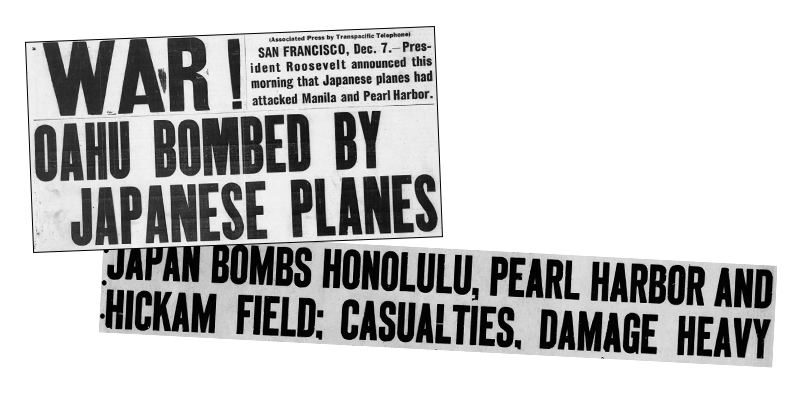
The United States entered World War II on December 8, 1941 – one day after Japan launched a surprise attack on the American naval base in Pearl Harbor, Hawaii.
The two-hour assault left 2,403 Americans dead and 1,178 injured.
It stunned the nation.

Source: National Archives
President Franklin Delano Roosevelt called upon Americans to contribute however they could to defeat Japan and its conspirators, Germany and Italy.
The three nations, known as the Axis Powers, shared goals of territorial expansion; each invaded nearby nations throughout the 1930s.
When Germany invaded Poland on September 1, 1939, Great Britain and France formed an alliance and came to Poland’s aid.
World War II erupted in Europe – two years before the United States joined the Allied Powers in the fight.
The Sunday Star-News (Wilmington, N.C.), Dec. 14, 1941
Led by Adolf Hitler, Nazi Germany had goals beyond expanding the nation’s borders.
The Nazis held that the people of the world were divided into distinct races.
Germans and other northern Europeans, they thought, belonged to the Aryans – the “superior” or “master” race. Aryans, Nazis believed, needed to protect themselves from other, non-Aryan races.
According to the Nazi’s racist theories, Jewish people (whom the Nazis saw as a race versus a religion) posed the greatest danger.
Nazi leaders passed laws discriminating against all non-Aryans, with Jews being the primary target. Non-Aryans were stripped of their German citizenship, driven from their homes, held in concentration camps as political prisoners, and killed.
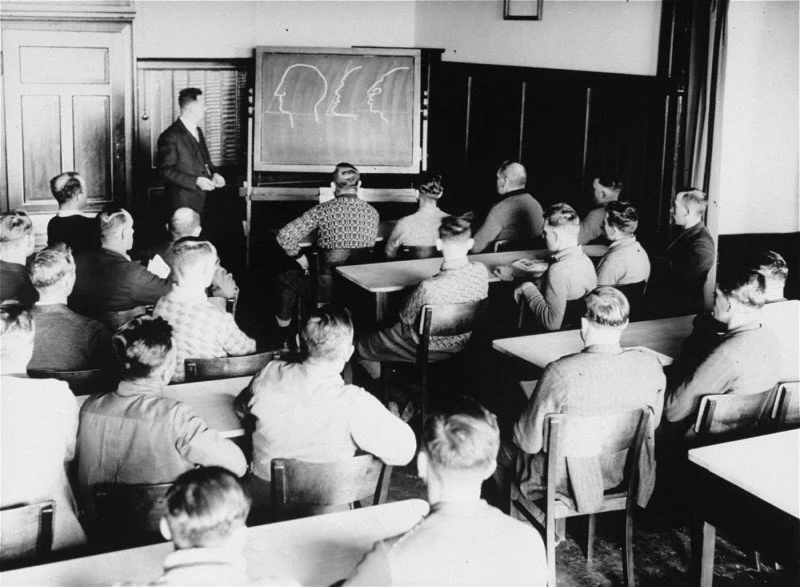
Image: German adults listen to a lesson outlining the Nazis’ racist theories.
Learn more about Nazi racial ideology ➚ from the U.S. Holocaust Memorial Museum
Source: Bayerische Staatsbibliothek München via the US Holocaust Memorial Museum
U.S. Anti-Nazi Posters
Source: Northwestern University Libraries
Source: National Archives
Hitler and the Axis Powers threatened to deprive independent nations of their right to form their own government and rule themselves. They also threatened the principle that all people should enjoy freedom, no matter their race or religion.
For this reason, the United States and the Allies saw the war as a fight for freedom and democracy.
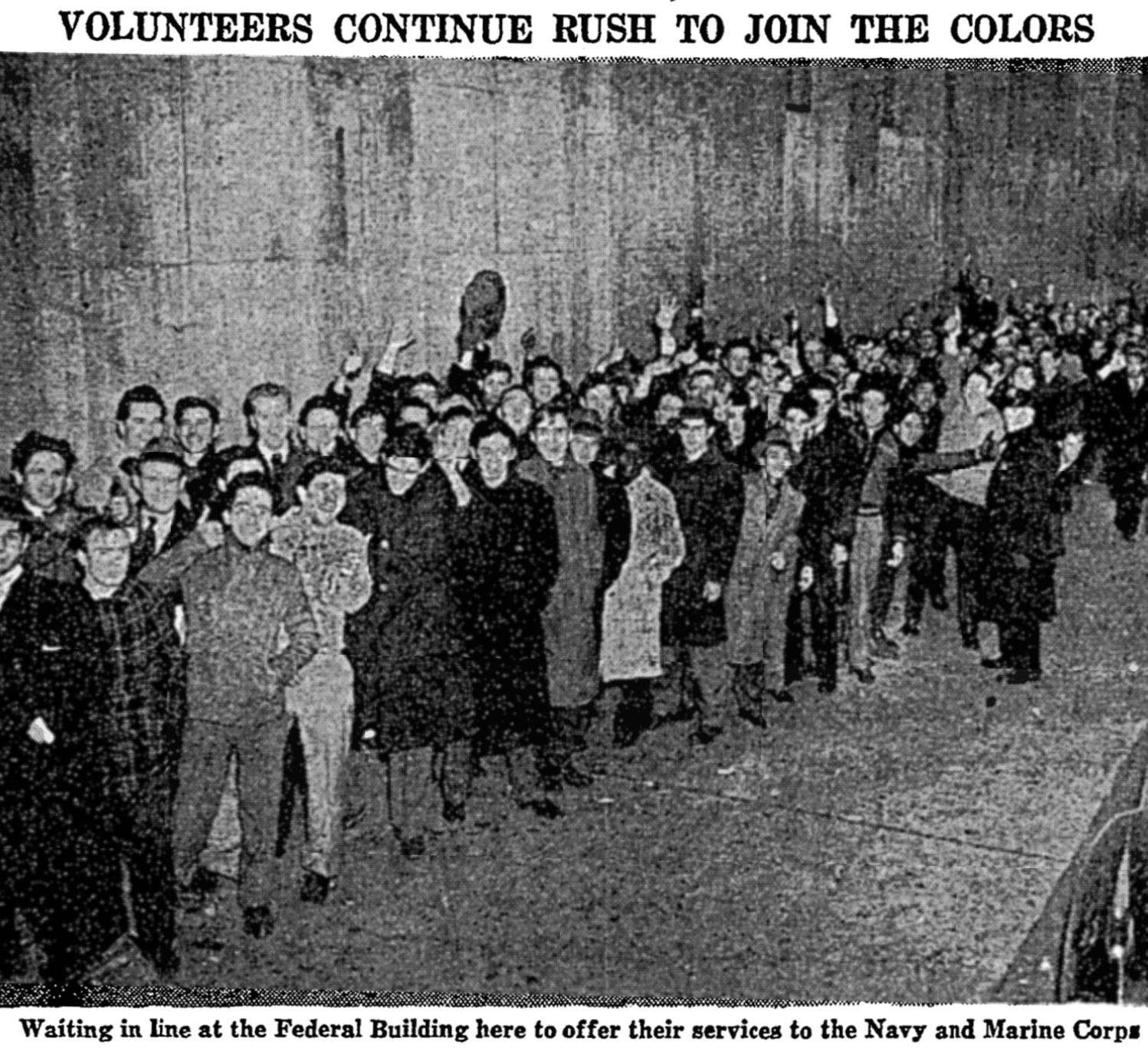
Americans everywhere answered Roosevelt’s call to contribute to the country’s efforts in World War II.
-
![]()
The New York Times, Dec. 10, 1941
-
![]()
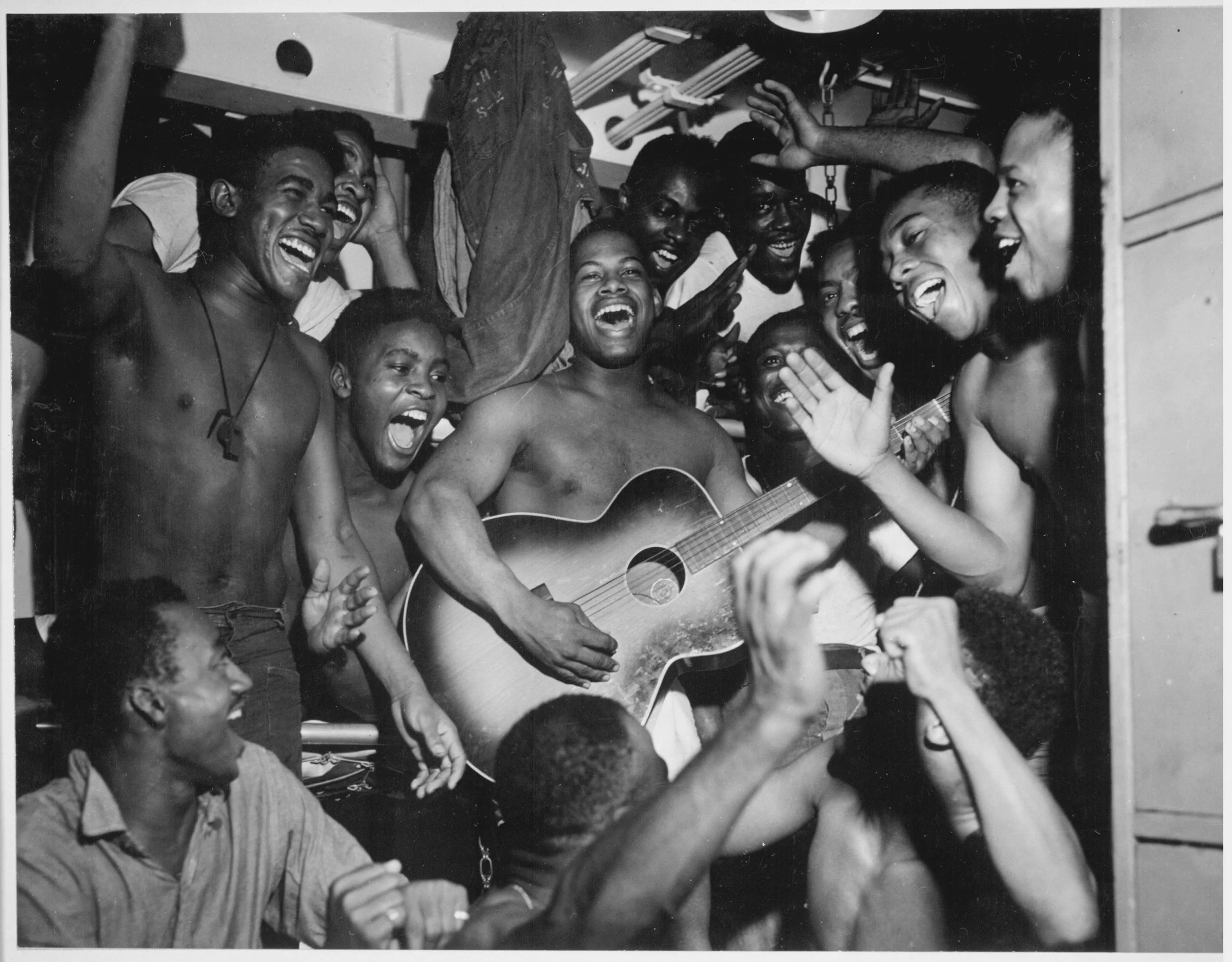
Servicemen aboard the U.S.S. Ticonderoga celebrate Japan’s surrender on Aug. 14, 1945.
Source: National Archives
-
![]()
Three Native American members of the Marine Corps study an intelligence problem in June 1943. The military used their Navajo language to encode messages during the war.
Source: National Archives
-
![]()
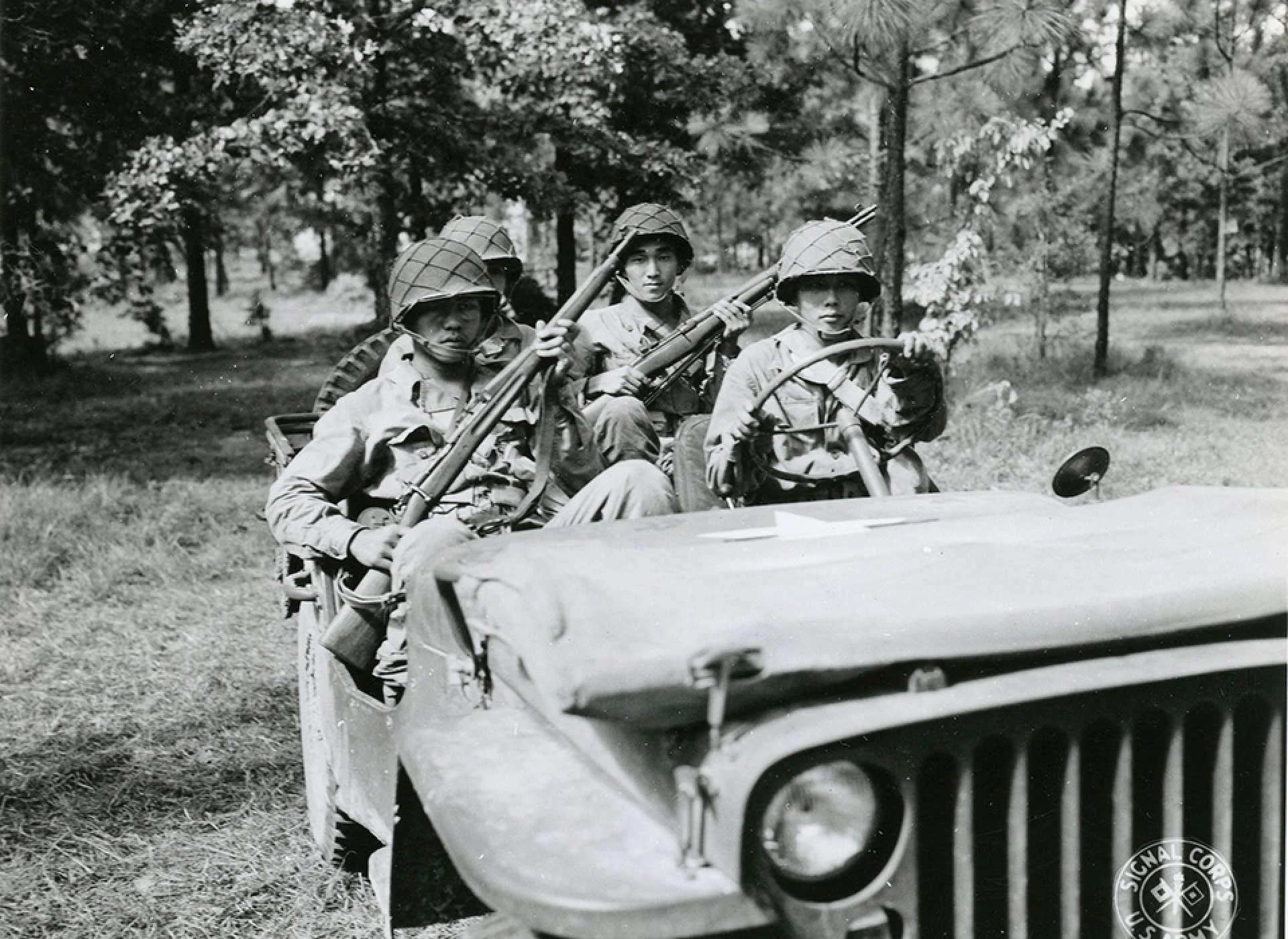
Japanese-American soldiers — all part of the 442nd Regimental Combat Team — ride in a Jeep in France.
Source: National Archives via National World War II Museum

-
![]()
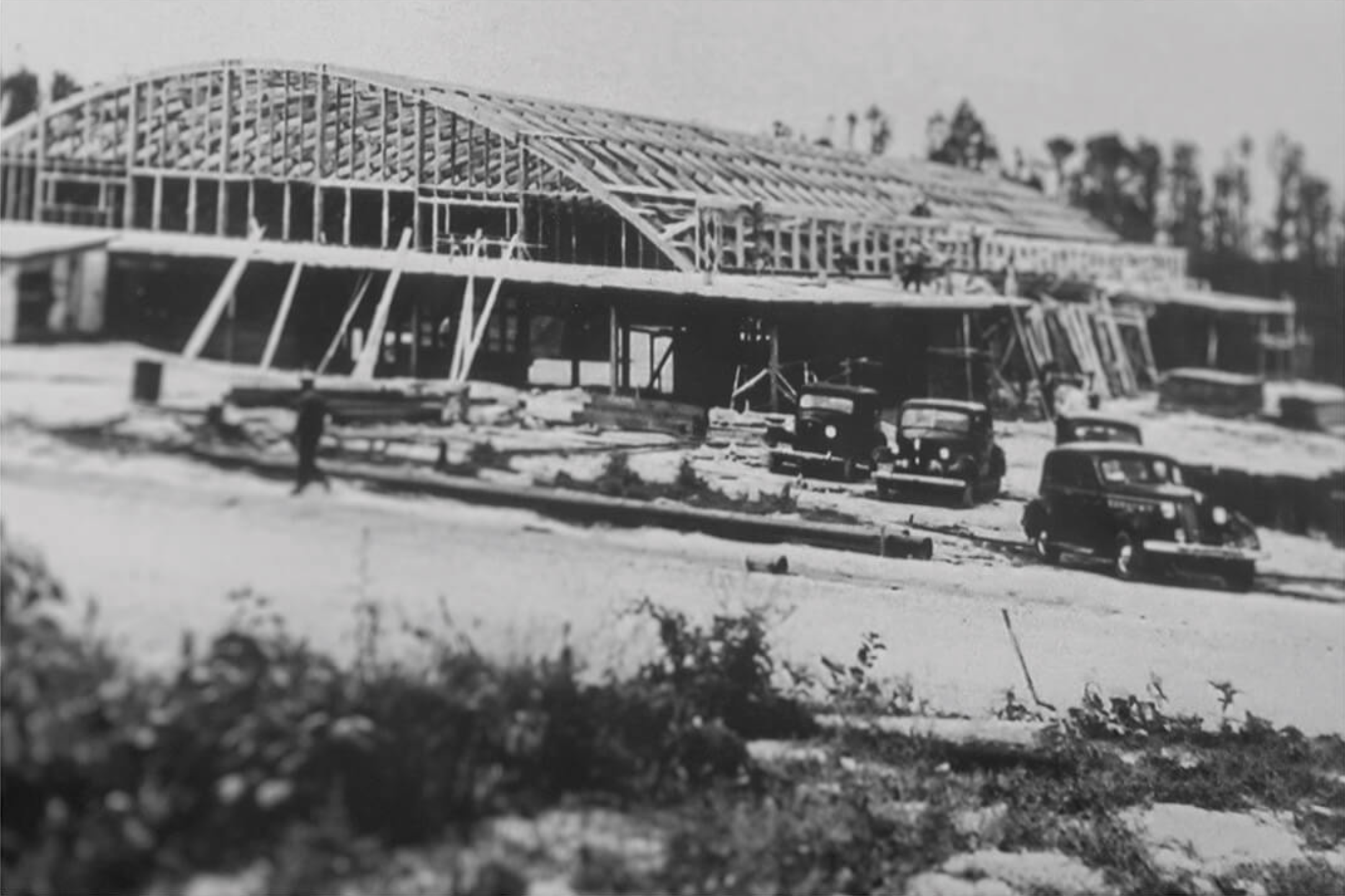
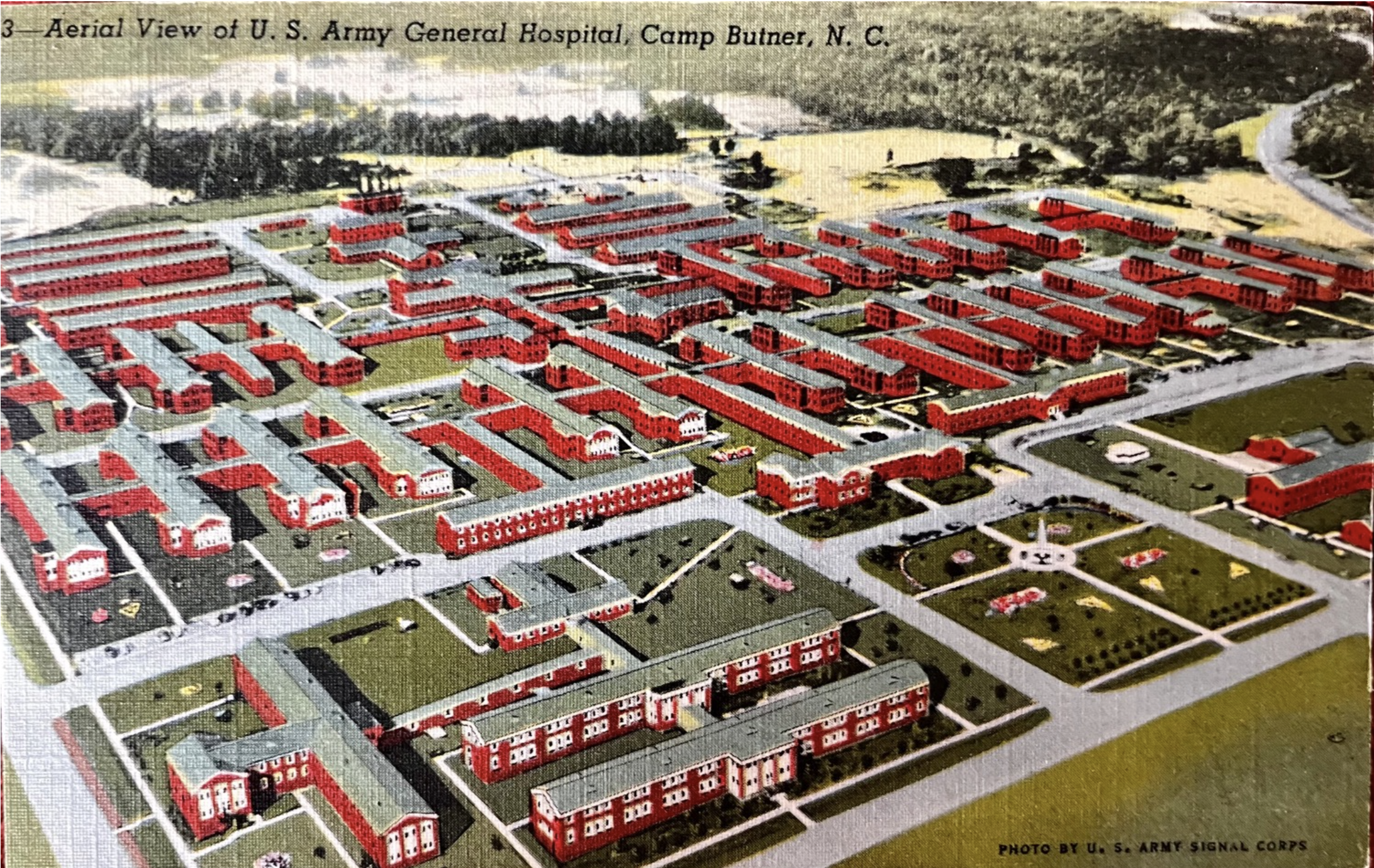
More than 15,000 laborers were bused in from nearby cities to build rifle ranges, artillery ranges, a prisoner of war compound, barracks, a hospital, and other support services for 40,000 troops at Camp Butner.
Here, workers build the camp gymnaisum using prefabricated pieces.
Source: State Archives of North Carolina
-
![]()
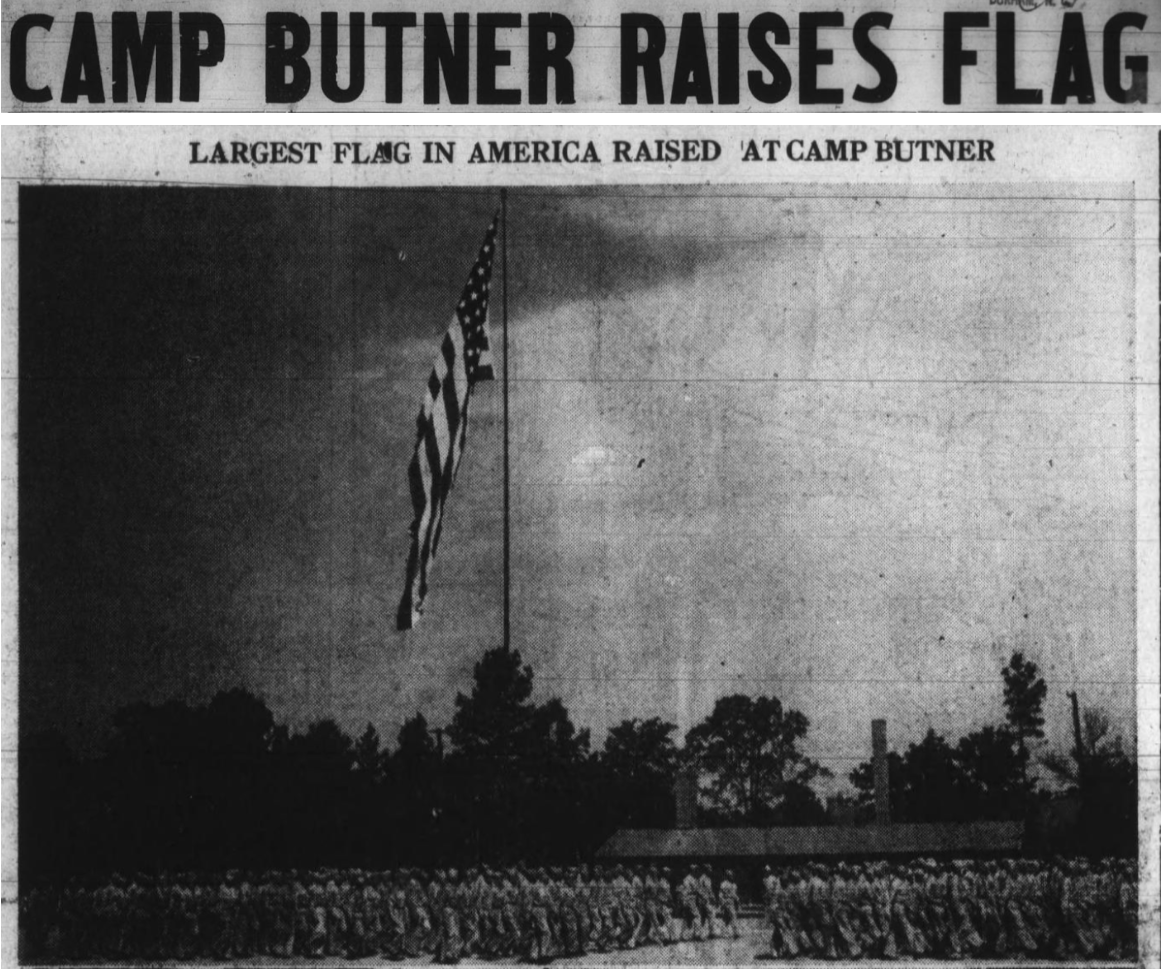
Crews worked around the clock – 24 hours a day, seven days a week. A building was completed every 15 minutes. The camp opened on August 4, 1942, only five months after construction began.
Here, Camp Butner raises the largest flag in the U.S. four days after its official opening.
Carolina Times, Aug. 8, 1942
-
![]()
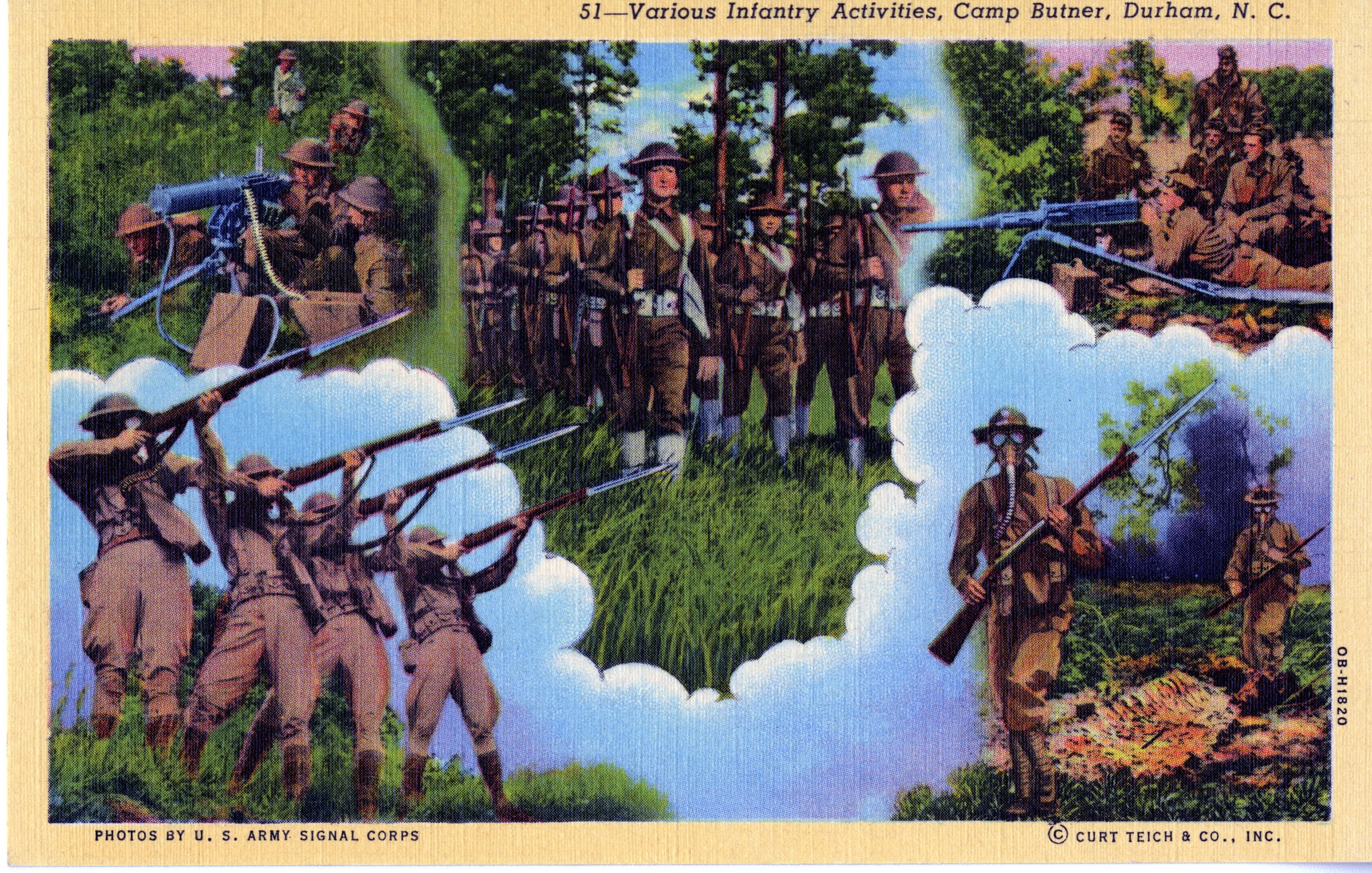
Postcard featuring infantry activities at Camp Butner
Courtesy of John Schelp
-
![]()
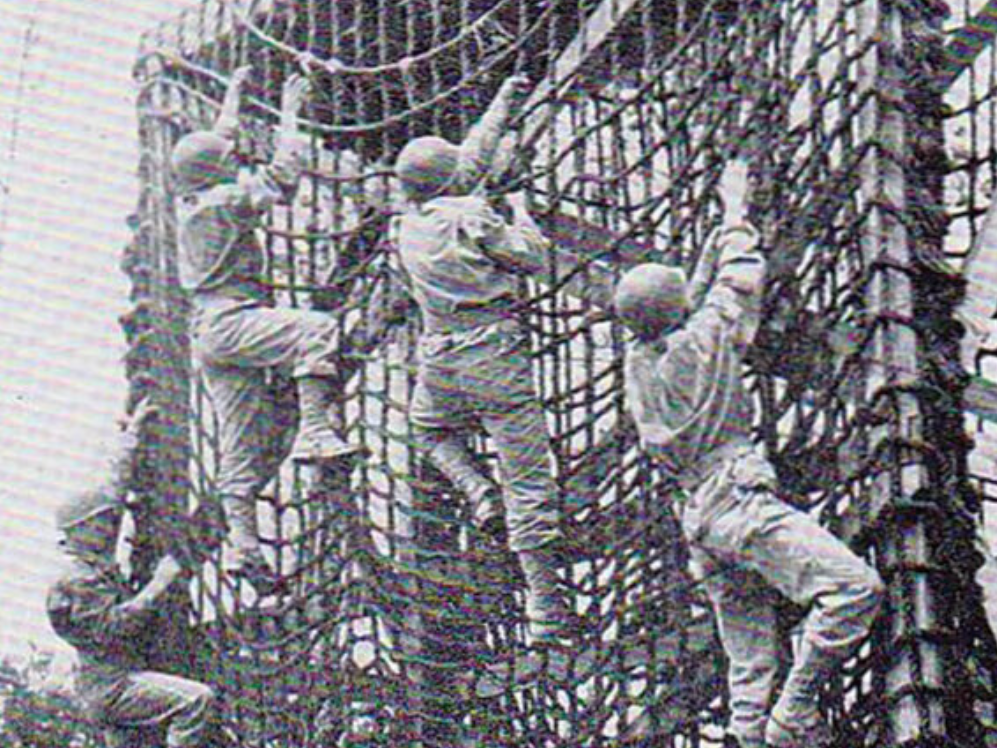
Soldiers scale the cargo net climbing wall at Camp Butner.
Source: State Archives of North Carolina
-
![]()
Postcard featuring an aerial view of the U.S. Army General Hospital at Camp Butner
Courtesy of John Schelp
-
![]()
Workers assemble the pilot’s compartment in an aircraft (May 1942)
Source: National Archives
-
![]()
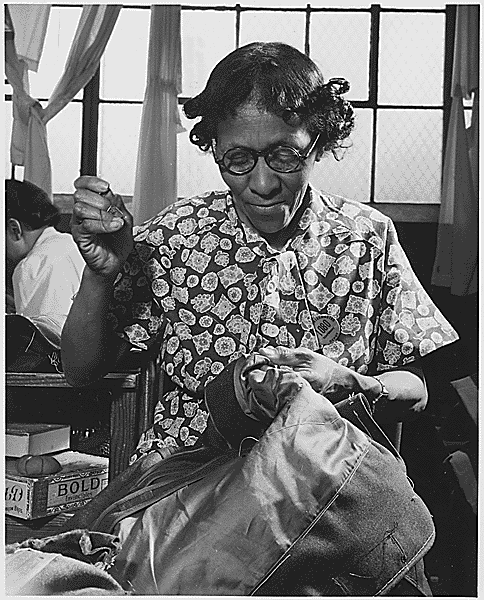
A worker at a quartermaster corps depot stitches sleeves on an army overcoat (May 1942)
Source: National Archives
-
![]()
Women at a vocational school in Florida train to work in the war industries (April 1942)
Source: National Archives
-
![]()
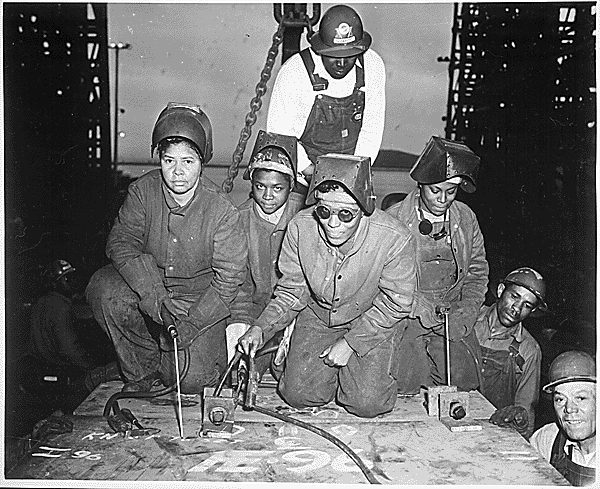
Female welders prepare to weld their first piece of metal on the SS George Washington Carver (1943)
Source: State Archives of North Carolina


President Franklin Delano Roosevelt, April 28, 1942:
“There is one front and one battle where everyone in the United States — every man, woman, and child — is in action, and will be privileged to remain in action throughout this war. That front is right here at home, in our daily lives, (and) in our daily tasks.”

Sources: National Archives via University of Virginia (audio); FDR Presidential Library (photo)
-
![]()
Source: Northwestern University Libraries
-
![]()
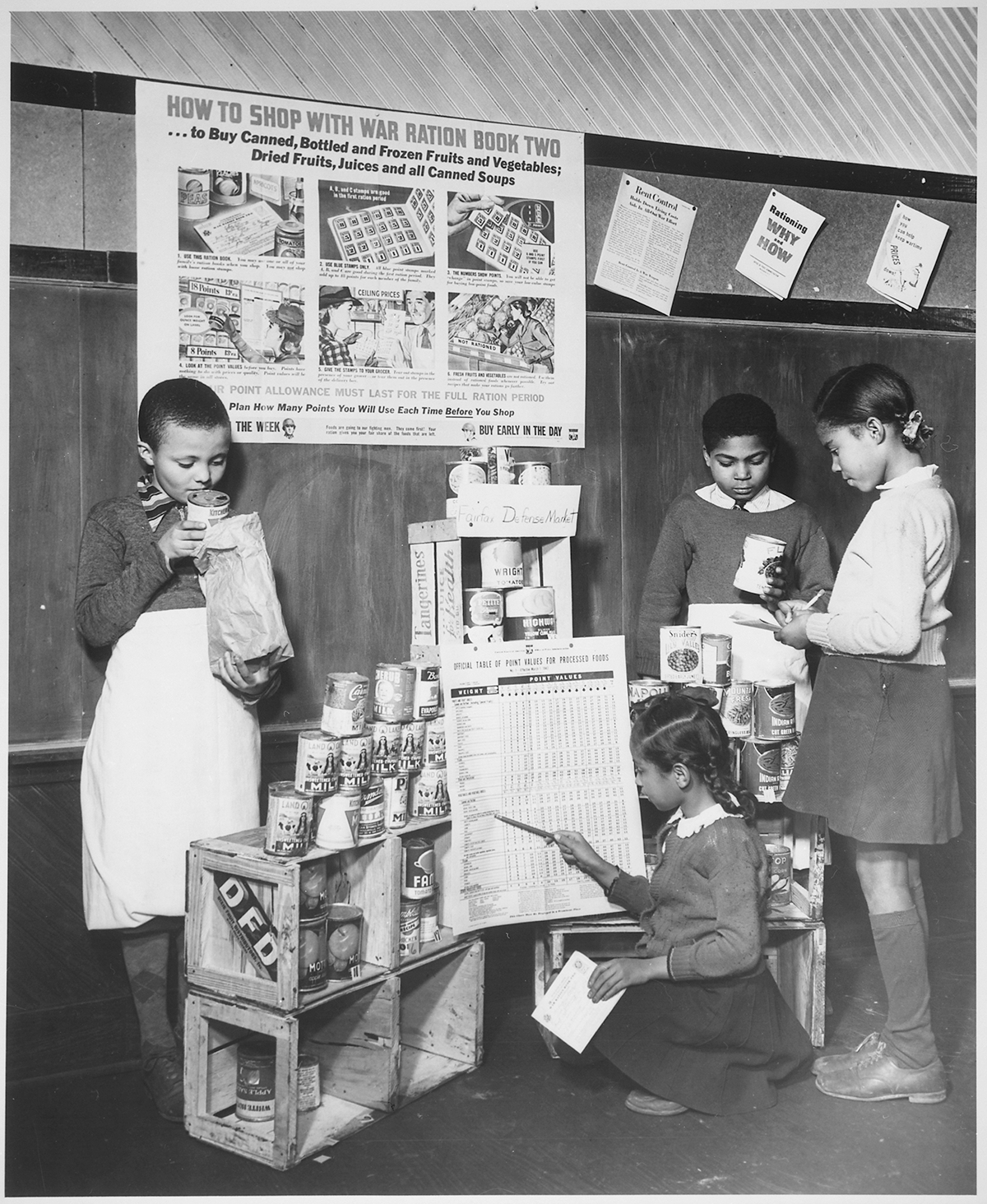
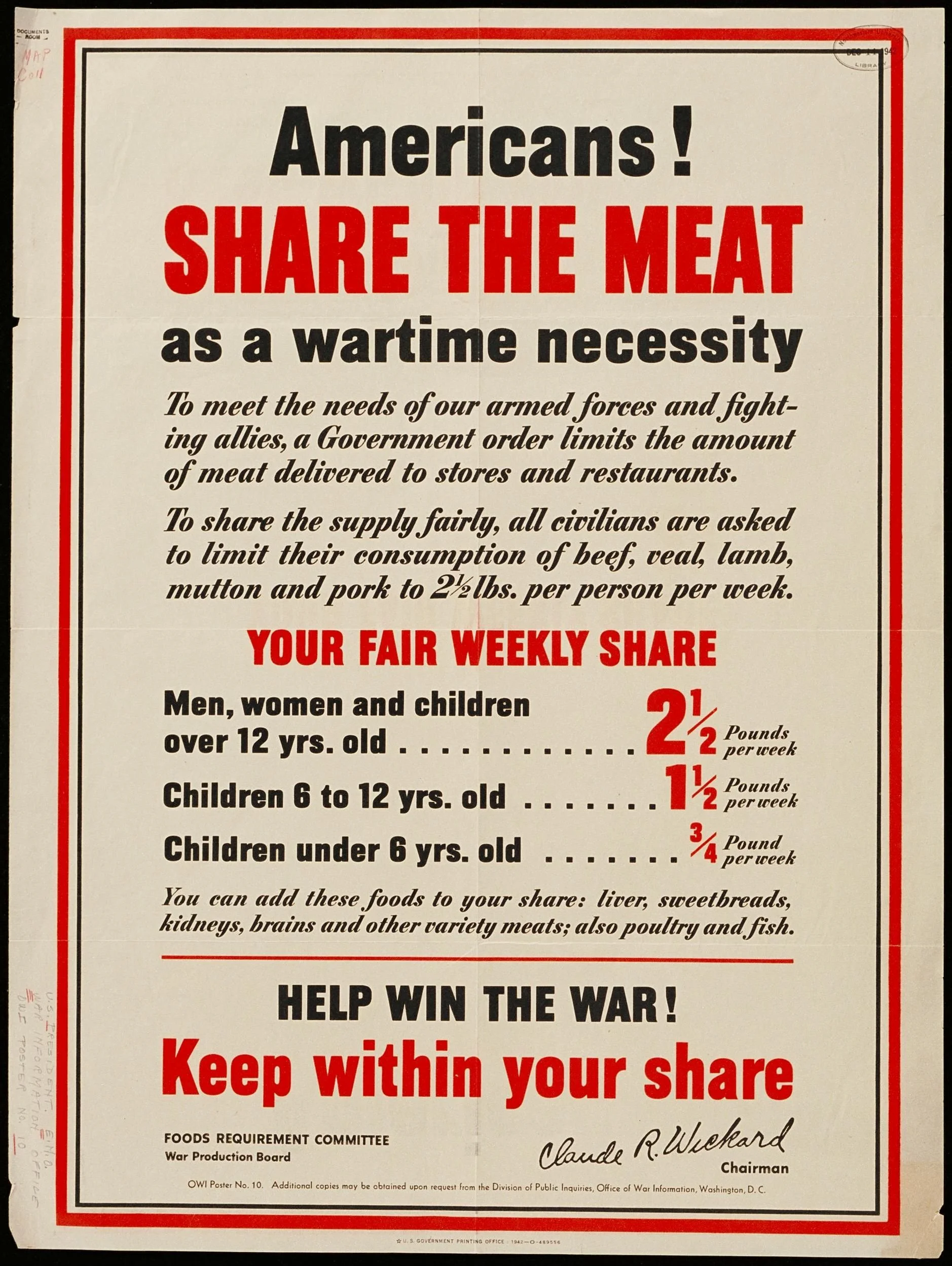
Children in Fairfax, Va., learn how to shop using ration books. In order to conserve supplies for the war, the U.S. government limited purchases of certain items. Ration books contained stamps, which individuals exchanged for food, tires, and other goods.
Source: National Archives
-
![]()
Source: Northwestern University Libraries
-
![]()
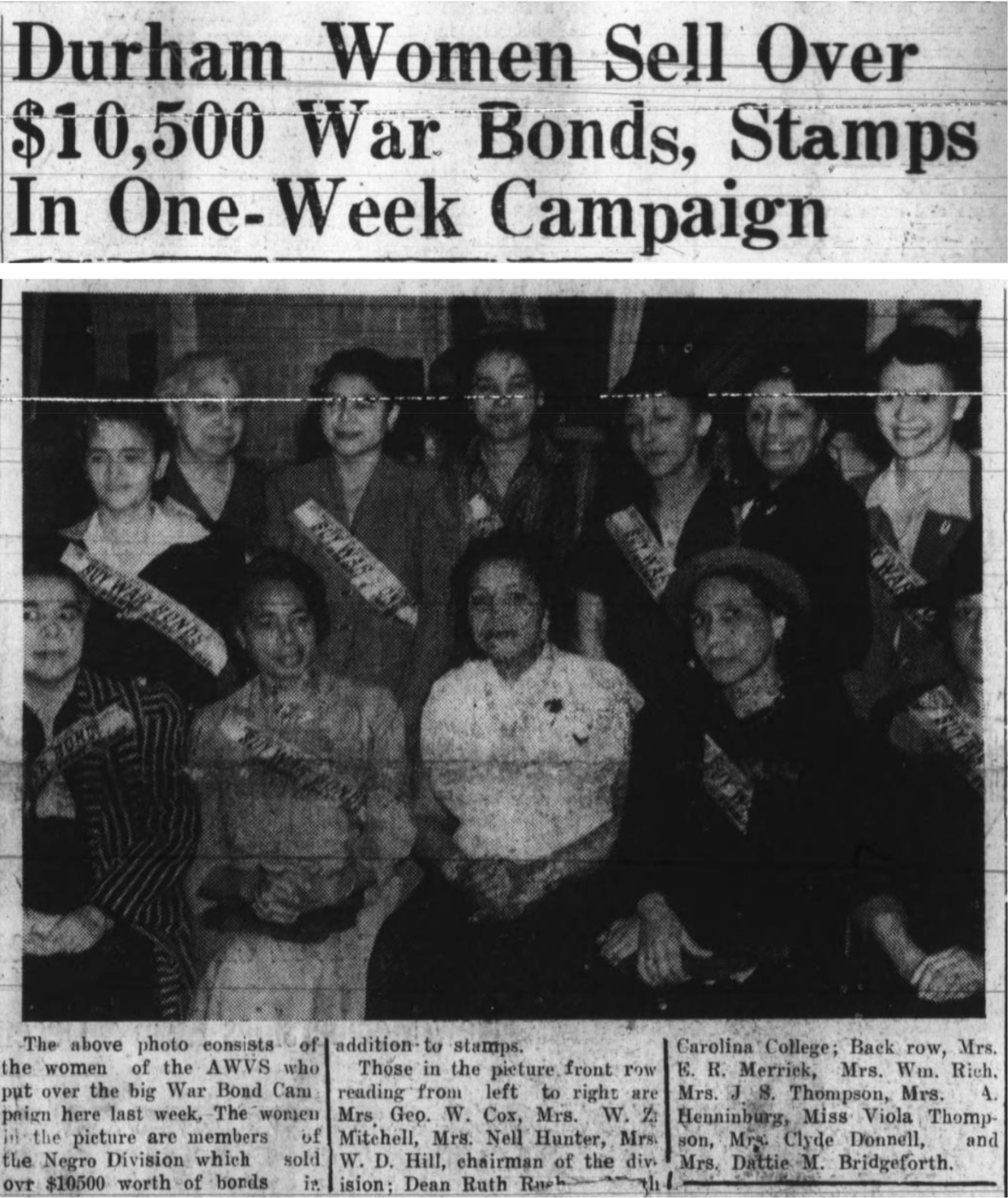
A group of Black women affiliated with the American Women’s Voluntary Services raised over $200,000 in today’s money for the war effort.
Carolina Times, Dec. 5, 1942
-
![]()
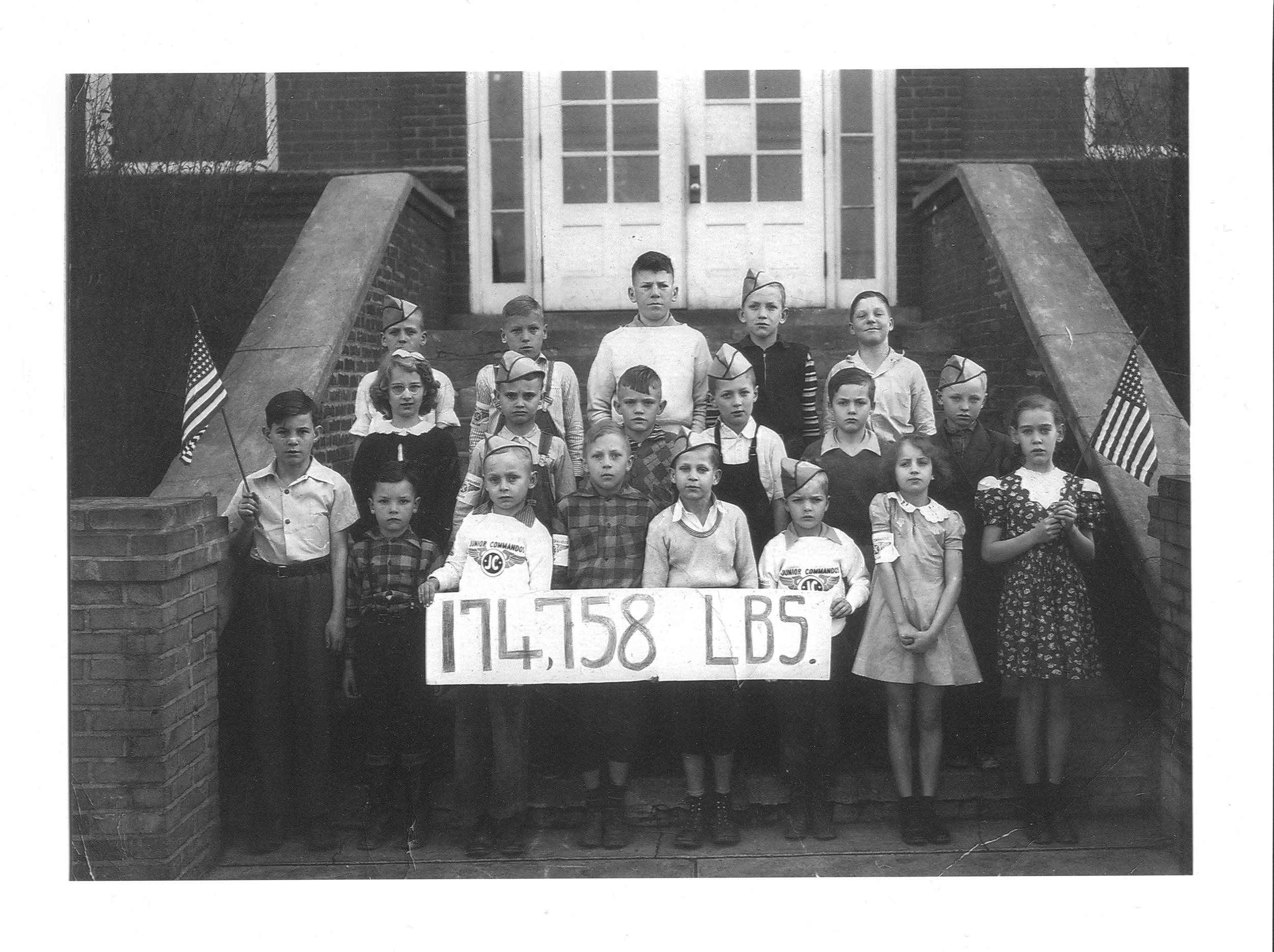
Children at Y.E. Smith Elementary School in Durham, N.C., showcase the results of their scrap drive.
Source: Durham County Library