

PART 4: DOUBLE VICTORY
Fighting for freedom abroad,
Black Americans were denied true freedom at home.
In January 1942, 26-year-old James G. Thompson wrote a letter to one of the nation’s premier African American newspapers, The Pittsburgh Courier.
Thompson asked Black Americans to embrace the idea of a “double victory”— to fight against Hitler’s attack on democracy abroad AND against segregation and racism at home:

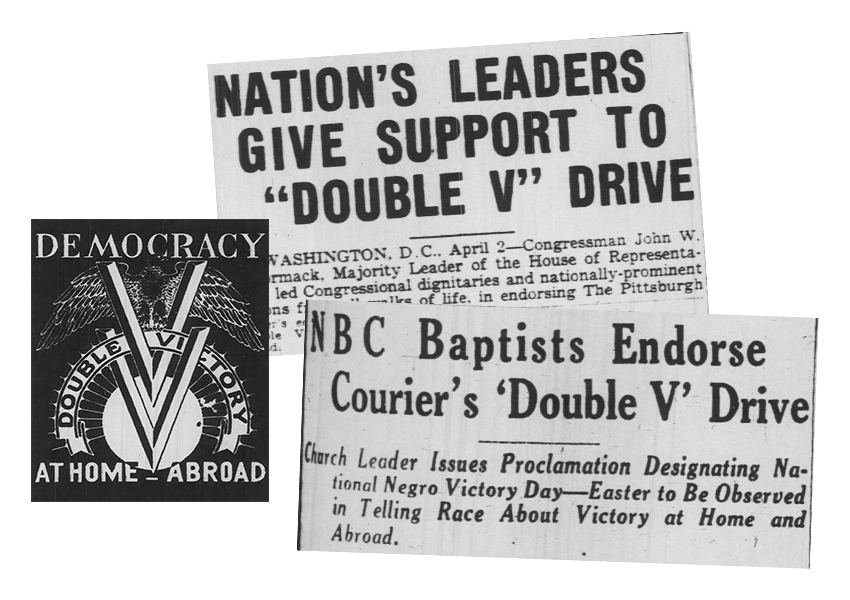
Thompson’s letter drew a response from around the nation, and the Courier launched a “Double V” campaign to help galvanize the struggle for equality.
Right: Excerpts from The Pittsburgh Courier on Feb. 21, March 21, and April 4, 1942
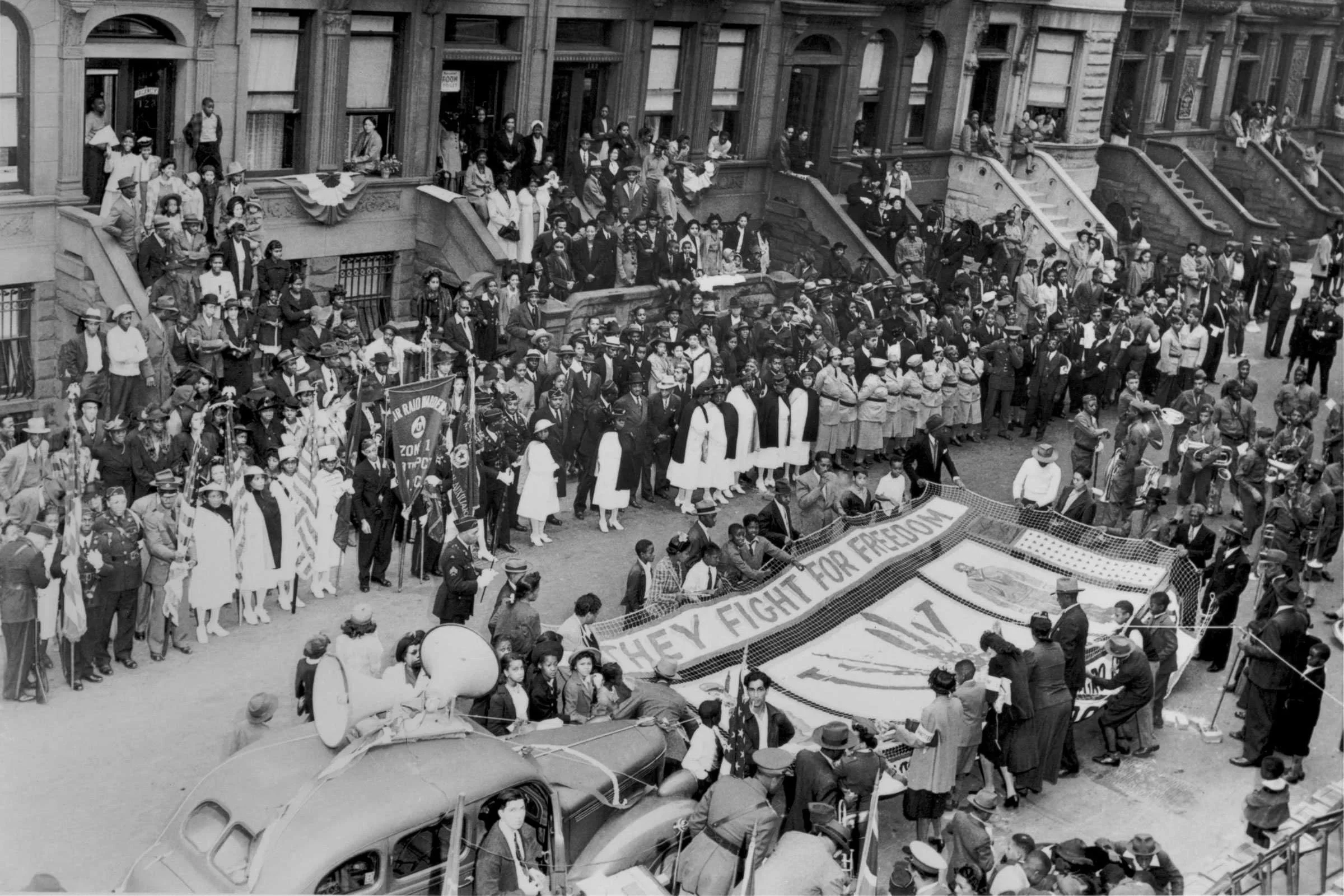
Double V rally on W. 119th Street in Harlem, New York (1942)
Photo by Austin Hansen. Source: New York Public Library
“Double V” became a rallying cry for Black Americans across the nation – from community leaders to poets and artists to college students to the NAACP.
-
![]()
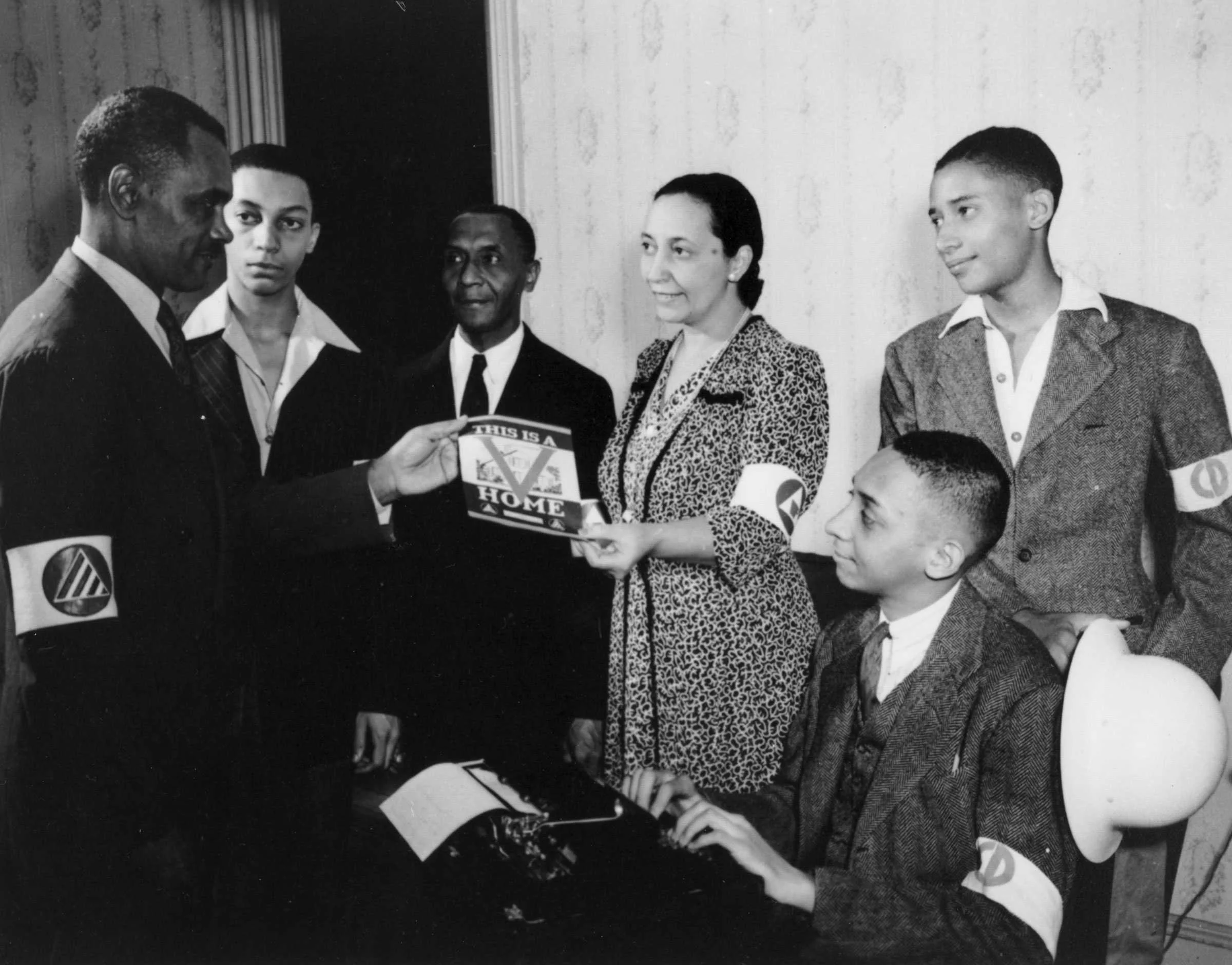
People showed their support for the campaign by displaying signs that read: “THIS IS A V HOME” (October 1942)
Source: Library of Congress
-
![]()
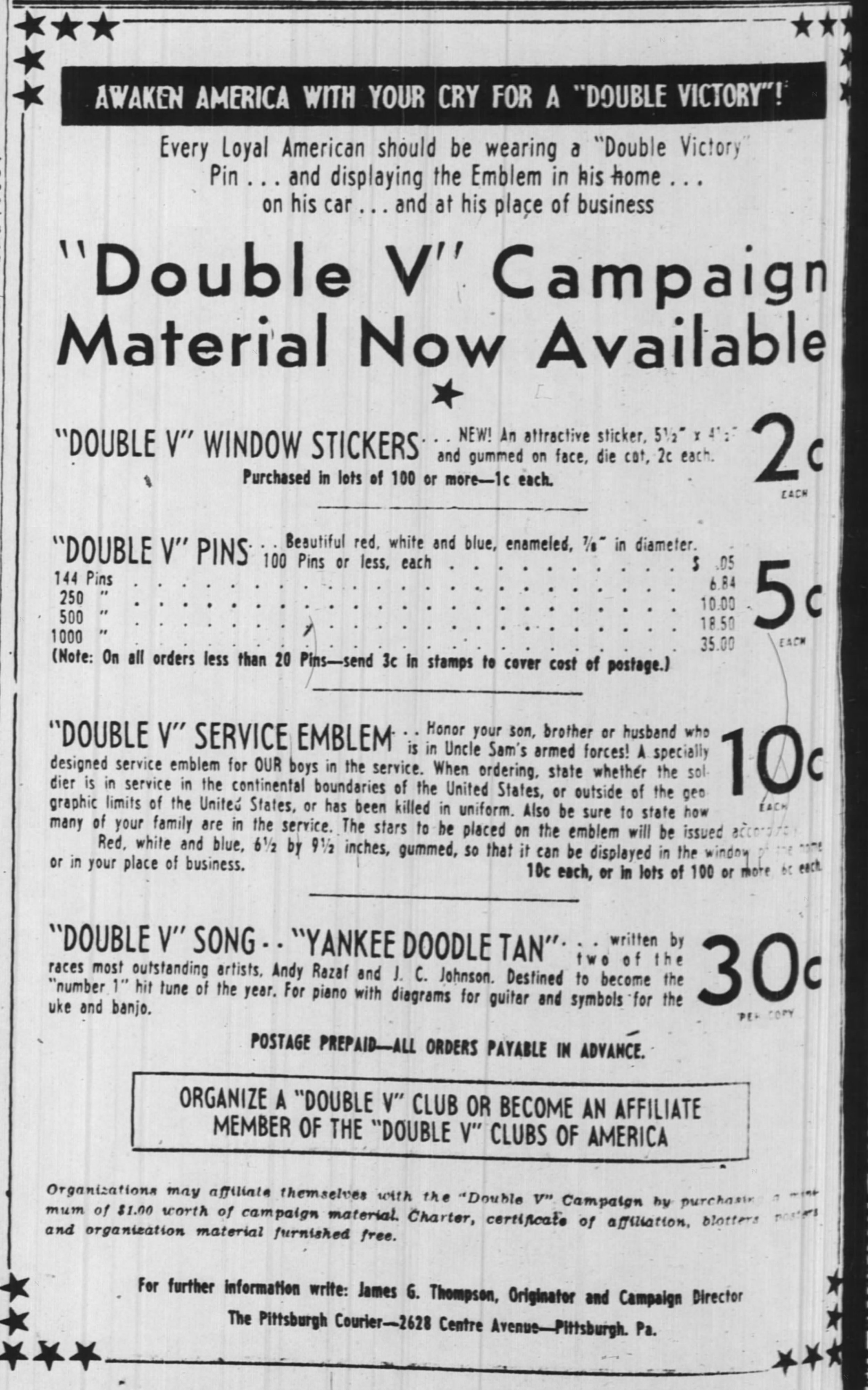
The Courier sold Double V merchandise and encouraged readers to form “Double V Clubs” in support of the cause
Source: The Pittsburgh Courier, June 13, 1942
-
![]()
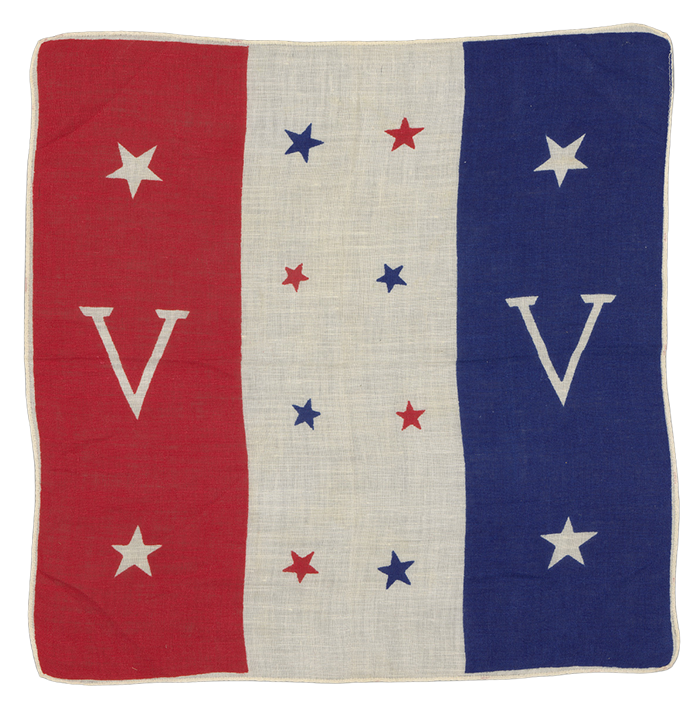
Handkerchief with Double V design (1942-45)
Source: National Museum of African American History and Culture
-
![]()
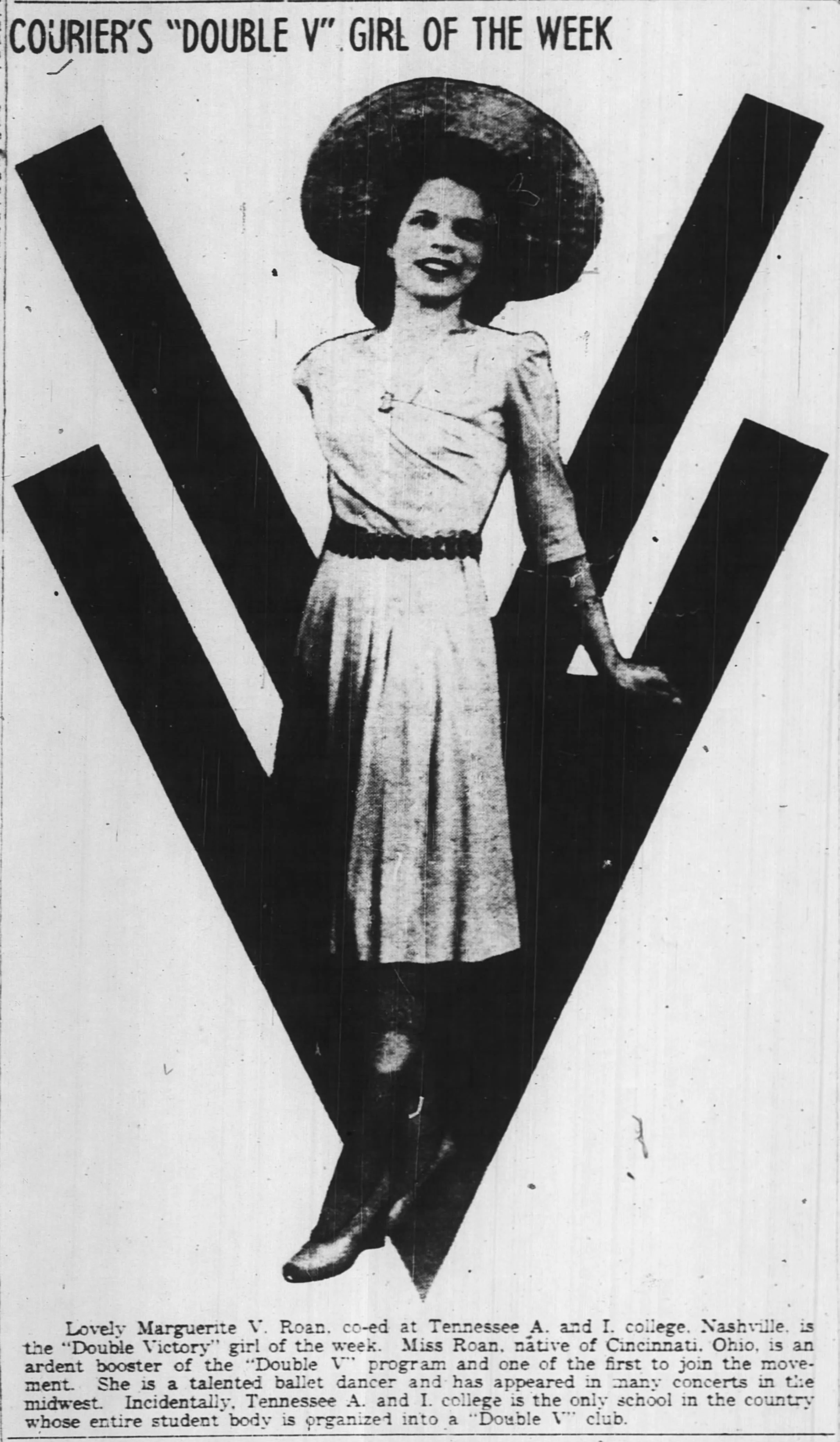
The Pittsburgh Courier featured Marguerite V. Roan, a supporter of Double-V and a student at Tennessee A. and I. College in Nashville. The caption says that the college was “the only school in the country whose entire student body is organized into a ‘Double V’ Club.”
Source: The Pittsburgh Courier, May 23, 1942
-
![]()
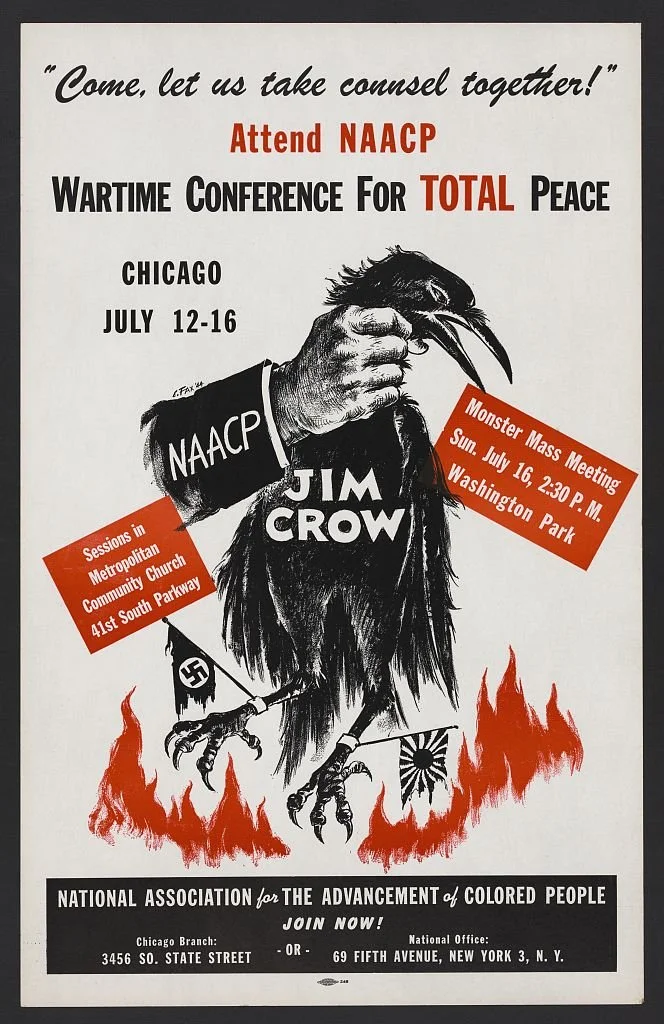
The National Association for the Advancement of Colored People (NAACP) joined the Double V campaign in 1942. This poster advertises an NAACP conference in July 1944.
Source: Library of Congress
In 1942, Langston Hughes, a prominent Black writer, penned a song called “I'm Marching Down Freedom's Road,” which became associated with the Double V campaign because its lyrics tied the war effort abroad to racial justice at home:
United we stand, divided we fall,
Let’s make this land safe for one and all.
I’ve got a message, and you know it’s right,
Black and white together unite and fight.
The song was most famously performed by another Black artist, blues singer Josh White.
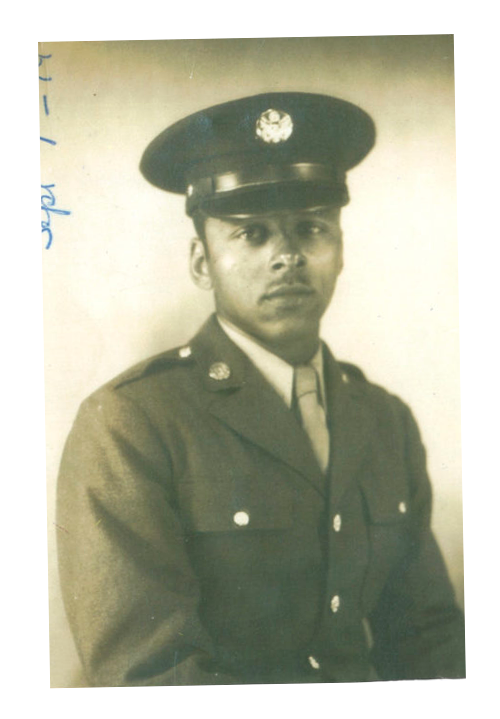
“Double V” was a powerful motivation for Black servicemen, too.
Born in Philadelphia, Leon Bass enlisted in the Army in 1943, when he turned 18. Bass served in the segregated 183rd Engineer Combat Battalion, which was commanded by white officers.
A young lieutenant quizzed Bass: Why were U.S. troops fighting the war?
Bass answered:
“Sir, we’re fighting this war because we want to preserve the rights and privileges that we enjoy here in our country. But I’m fighting the war back here at home because I don’t have my rights and privileges.”
Source: The National World War II Museum (interview); Yale Fortunoff Video Archive for Holocaust Testimonies (image)
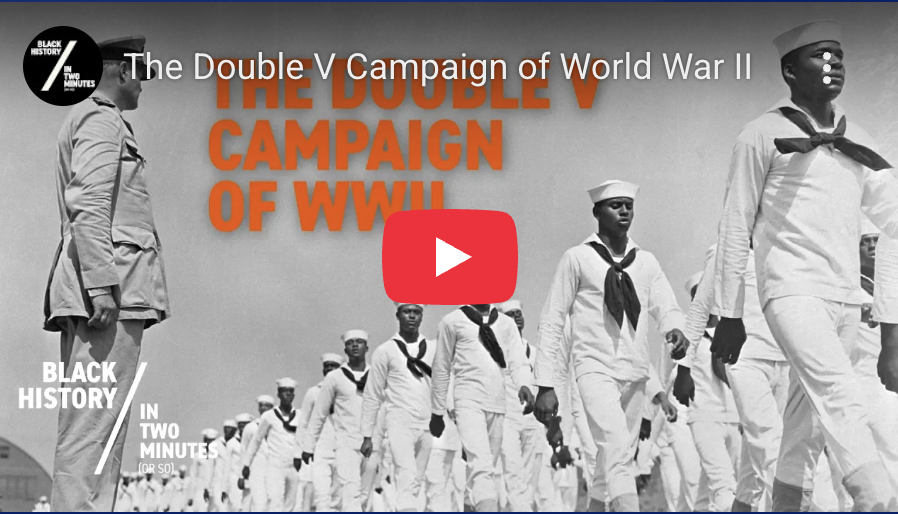
Want to learn more about the Double V campaign? Check out this video, part of the Black History in Two Minutes (or so) video series:
Today, Booker T. Spicely is recognized as one soldier among many who sacrificed his life – not on the front lines of battle in Europe, but on the front lines of the Double V campaign.
Carolina Times, 1944, from Department of Justice files via the Civil Rights and Restorative Justice Project